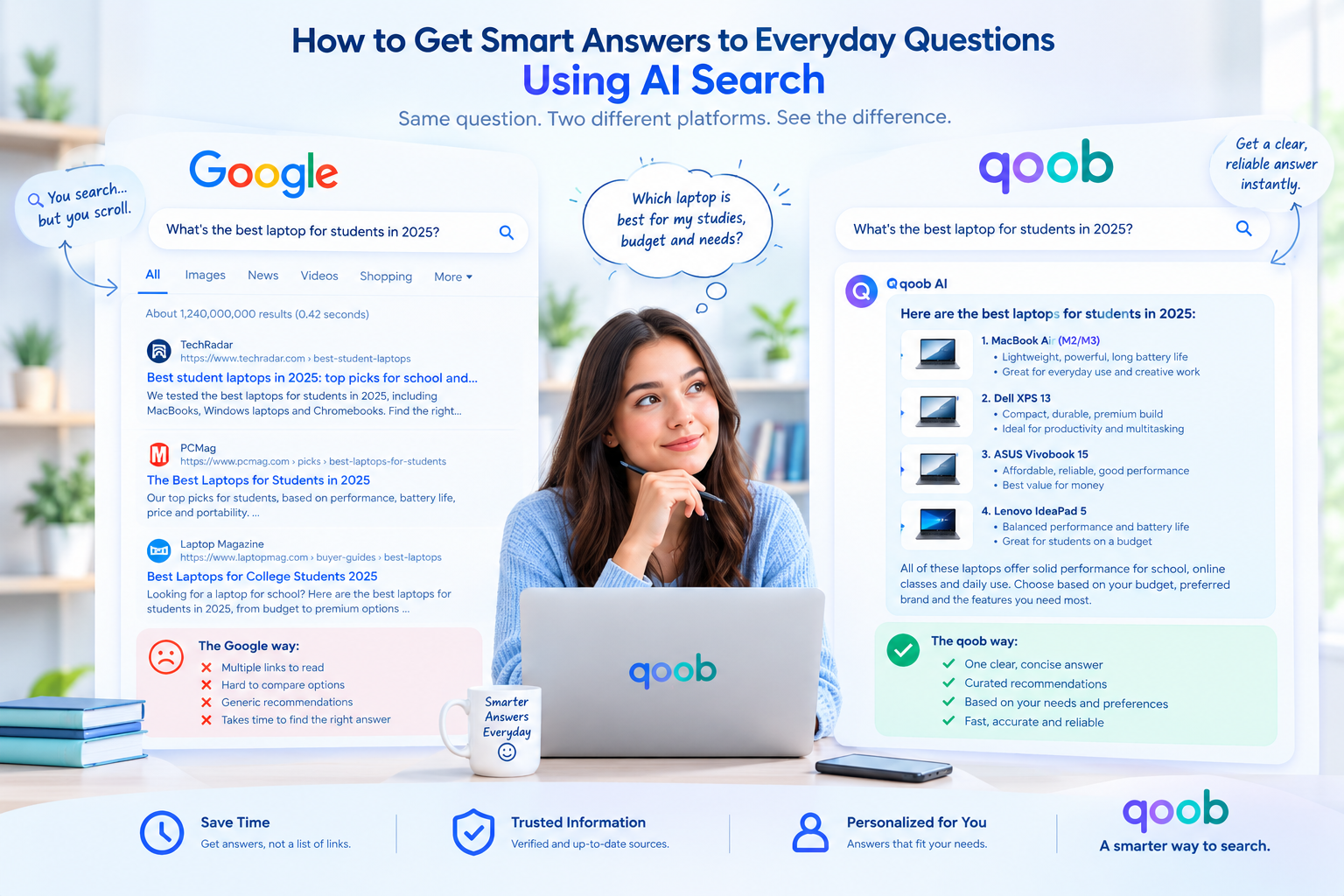

Finding answers online should be simple, but sometimes a quick question turns into a long research session. You search for a product recommendation, a travel idea, or a solution to an everyday problem, only to find dozens of links, lengthy articles, and conflicting opinions. Sorting through all that information can take more time than making the actual decision.
AI-powered search offers a more conversational way to find information. Instead of relying only on short keywords, you can ask questions in your own words and explore responses that focus on what you want to know.
Learning how to get smart answers from AI search can help you research everyday topics, compare options, and make informed decisions with less unnecessary effort.
What Are Smart Answers in AI Search?
Smart answers are clear, relevant responses designed to address a user’s question directly. In AI-powered search, these answers may be generated by artificial intelligence, informed by retrieved information, or organized from available sources, depending on the tool.
Traditional search engines generally present a list of webpages for users to explore. AI search can offer a more conversational experience by interpreting the meaning behind a question and presenting information in an easier-to-understand format.
For example, instead of searching for “easy healthy dinner recipes,” you could ask, “What can I cook for dinner in 20 minutes using simple ingredients?”
The second question provides more context, making it easier to explore options that match your needs.
How Does AI Search Provide Smart Answers?
AI search tools use different technologies to interpret questions and provide useful responses. Their capabilities depend on how each platform is designed.
Some systems use natural language processing to understand what a question means. Others retrieve information from online sources and use AI to summarize or organize the results.
A typical AI search experience may involve three steps:
- Understanding intent: Interpreting the user’s question and identifying the information needed.
- Finding relevant information: Using available knowledge or search sources to identify useful material.
- Presenting an answer: Organizing information into a readable response that helps the user understand the topic.
The quality of the result depends on the question, the information available, and the reliability of the system.
How Qoob Helps You Find Smart Answers
If you want a more straightforward way to explore everyday questions, try Qoob’s smart answers through AI search.
Qoob is designed around a simple idea: users should be able to ask questions in their own words and receive short, useful answers without having to navigate a long list of links or learn complicated AI prompting techniques.
A More Convenient Search Experience
Qoob focuses on everyday questions and decisions, including travel planning, recipe ideas, and shopping comparisons. Its approach aims to make information easier to understand so users can focus on the decision rather than spending unnecessary time searching.
You can begin with a simple question, review the response, and refine your search when you need more information.
As with any AI-powered tool, it is sensible to verify important facts independently and consult original sources when accuracy matters.
How to Get Smart Answers to Everyday Questions Using AI Search
Getting a useful answer does not require technical knowledge or complicated prompts. A few simple habits can help you communicate your needs more clearly and get more relevant results.
1. Ask Questions in Natural Language
You do not need to translate your thoughts into technical keywords. Start by asking the question exactly as you would ask another person.
For example, instead of typing “best laptop student,” ask, “What should a college student look for when buying a laptop for online classes and basic programming?”
A complete question gives the search tool more context about your needs. It also helps you focus on relevant features instead of browsing through unrelated recommendations.
2. Include Details That Matter
Specific details can make a question more useful. Depending on the topic, these details might include your budget, location, available time, intended use, or personal preferences.
Suppose you want to buy wireless headphones. Asking, “Which wireless headphones should I consider for daily commuting and online meetings?” establishes a clearer purpose than simply asking for the best headphones.
Adding a budget or other requirements can narrow the options further. However, avoid sharing sensitive personal information that is not necessary for the search.
3. Ask Follow-Up Questions
Sometimes the first answer provides a helpful starting point but does not cover everything you need to know. Follow-up questions allow you to explore the topic further.
For example, after asking about holiday destinations, you might ask, “Which of these destinations is more suitable for a family travelling on a moderate budget?”
You can also request a simpler explanation, ask for examples, or explore the advantages and disadvantages of different options.
This conversational approach can help turn a broad question into information that is more relevant to your situation.
4. Explain What Kind of Answer You Need
The purpose of a question can influence what makes an answer useful. If you want to learn something, an explanation may be appropriate. If you are making a decision, a comparison of options may be more helpful.
For example, instead of asking, “Tell me about electric scooters,” try asking, “What should I compare before buying an electric scooter for my daily commute?”
This directs attention towards practical considerations such as range, charging time, maintenance, safety features, and cost.
Everyday Situations Where Smart Answers Can Help
AI search can support many routine activities, from learning new concepts to planning purchases. The most useful applications are often the ones that help you understand your options and decide what to do next.
Learning and Understanding New Topics
When you encounter an unfamiliar concept, AI search can help explain it in straightforward language.
A student might ask, “What is compound interest, and how does it work with a simple example?” A professional might ask, “What is cloud computing, and why do businesses use it?”
These questions can provide an accessible introduction before you explore more detailed resources.
For academic or professional research, verify important claims against reliable references, original documentation, or established research sources.
Shopping and Comparing Products
Choosing a product often involves comparing specifications, features, prices, and long-term value. AI search can help you identify the factors that deserve attention before making a purchase.
For example, you could ask, “What features should I compare when choosing a smartphone for photography and long battery life?”
Use the response as a starting checklist, then verify current prices, specifications, warranties, and availability with manufacturers or retailers.
Travel Planning and Daily Decisions
Planning a trip involves several connected decisions, including transportation, accommodation, activities, and budget.
You could ask, “What should I consider when planning a three-day family holiday on a moderate budget?”
A useful response can help organize your priorities and highlight questions that need further research. Confirm time-sensitive details such as transport schedules, weather forecasts, opening hours, and booking availability through relevant official sources.
Finding Solutions to Everyday Problems
Smart answers can also help with routine challenges, such as organizing a small workspace, learning basic cooking techniques, or managing daily tasks.
For example, asking, “How can I organize a small home office with limited storage space?” gives the search tool a clear problem to address.
For medical, legal, electrical, or other high-risk matters, use qualified professional guidance rather than relying solely on an AI-generated response.
How to Check Whether an AI Answer Is Reliable
A clear answer is not automatically a correct answer. AI systems can misunderstand questions, provide outdated information, or generate statements that sound convincing but are inaccurate.
Verify Important Facts
For questions involving health, finances, safety, laws, or significant purchases, check important claims against trustworthy sources. Government websites, recognized professional organizations, original research, and official product documentation can provide useful evidence.
If a search tool provides citations, open the sources and confirm that they actually support the claims being made.
Consider Privacy and Trust
Before using an AI search platform, understand how it handles search history, personal information, and saved activity. Avoid entering passwords, confidential documents, or sensitive details unless you understand the relevant protections and have a legitimate reason to share them.
Responsible AI use also means recognizing the limits of automated systems and keeping human judgment involved in important decisions.
For additional reading, visit ethical considerations of agentic AI and how to navigate them discusses issues such as privacy, transparency, accountability, and human oversight. Although it focuses on agentic AI, these considerations provide useful context for thinking critically about AI systems more broadly.
Final Thoughts
Getting smart answers from AI search starts with asking clear questions, providing relevant context, and using follow-up questions to explore your options. These simple habits can make online research more convenient and help you approach everyday decisions with greater clarity.
At the same time, useful answers require critical thinking. Verify important information, protect your privacy, and recognize when a question requires expert guidance.
Qoob offers a smart search experience designed to help people find clear answers and make better everyday decisions.