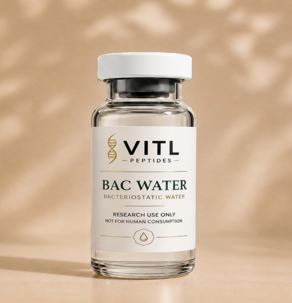

Bacteriostatic water is a specialized water preparation used in certain laboratory and pharmaceutical settings. Its composition, preservative content, packaging, and intended use determine whether it meets the requirements of a particular application. Although it may appear similar to other sterile water products, bacteriostatic water has distinct characteristics that researchers should understand before evaluating product specifications or quality documentation.
When looking to buy bacteriostatic water, it is important to consider more than product availability. Composition, sterility assurance, manufacturer information, labeling, and applicable safety requirements all contribute to a responsible evaluation. A product’s name alone does not confirm that it is appropriate for every compound or procedure. Understanding these differences helps researchers assess product information and avoid assumptions about compatibility or safety.
What Is Bacteriostatic Water?
Bacteriostatic water is a water-based preparation formulated to inhibit the growth of certain bacteria under specified conditions. Common formulations contain a preservative that helps limit microbial multiplication when used according to the product’s instructions. Its exact characteristics depend on the formulation, manufacturing controls, packaging, and intended application.
The term describes a particular property, not a guarantee that a product is free from every microorganism or suitable for all uses. Product documentation should be reviewed carefully before determining whether a preparation meets the requirements of a specific laboratory or pharmaceutical process.
Understanding the Meaning of Bacteriostatic
The word bacteriostatic refers to the inhibition of bacterial growth rather than the complete destruction of all bacteria. The degree of inhibition depends on factors such as the organisms involved, preservative concentration, and surrounding conditions.
Bacteriostatic activity should not be confused with sterilization. Sterilization is a validated process intended to eliminate viable microorganisms, including bacterial spores. A product may be manufactured under sterile conditions and contain a preservative, but these are separate characteristics that serve different purposes. Neither should be assumed without suitable product information.
The Role of Benzyl Alcohol in Common Formulations
Some bacteriostatic water formulations contain benzyl alcohol as a preservative. In commonly used pharmaceutical formulations, this ingredient helps inhibit the growth of certain bacteria under specified conditions.
However, the presence of a preservative does not mean that a preparation can prevent every type of microbial growth. Its effectiveness depends on the formulation and the microorganisms involved. Benzyl alcohol also has safety considerations and is not suitable for every application or population. Researchers should follow official product labeling and relevant professional guidance rather than assume that all formulations are interchangeable.
How Bacteriostatic Water Differs From Sterile Water
Sterility and bacteriostatic activity describe different properties. Sterile water has undergone a process designed to meet specified sterility requirements. Bacteriostatic water commonly includes a preservative intended to inhibit bacterial growth under defined conditions.
Some bacteriostatic water products are sterile when manufactured and packaged, but the preservative does not replace the need for appropriate manufacturing controls. Similarly, sterile water without a preservative does not provide the same preservative effect after opening. The appropriate preparation depends on the labeled application, material involved, and applicable protocols.
What Are the Differences Between Bacteriostatic Water and Other Water Products?
Water preparations intended for laboratory and pharmaceutical use can differ in composition, packaging, sterility requirements, and approved applications. Products that look similar may not meet the same technical or safety standards.
Before selecting a preparation, examine its complete label and instructions. Do not assume that one type of water can replace another without checking compatibility, composition, and intended use.
Bacteriostatic Water Versus Sterile Water for Injection
Sterile Water for Injection is a pharmaceutical preparation supplied under defined quality requirements and intended for use according to its official labeling. It generally does not contain an antimicrobial preservative. Its handling and use after opening depend on the specific container and instructions.
Bacteriostatic Water for Injection contains a preservative, commonly benzyl alcohol, in addition to water meeting the relevant requirements. Its labeling defines the circumstances in which it may be used. These preparations are not automatically interchangeable because their ingredients, compatibility, and permitted applications may differ.
This distinction is particularly important in medical settings, where product selection must follow approved labeling and professional protocols.
Bacteriostatic Water Versus Preservative-Free Products
Preservative-free preparations do not contain an antimicrobial preservative intended to inhibit microbial growth after opening. Their handling requirements depend on their specific packaging and labeling. Some are intended for applications where preservatives would be unsuitable or could affect the material being studied.
Bacteriostatic formulations may be appropriate for certain labeled applications, but their preservative content can limit compatibility with particular substances or procedures. The correct choice requires an understanding of the intended application and relevant product instructions.
Why Product Labels and Intended Uses Matter
Labels identify composition, intended application, storage requirements, warnings, and other essential details. A product described simply as laboratory water may not meet the requirements of a pharmaceutical preparation.
Check whether a product is intended for laboratory research, a specific pharmaceutical application, or another purpose. A product labeled for research should not be presumed suitable for injection or human use. The intended application must be supported by the appropriate product specifications and regulatory authorization.
What Should You Check Before Evaluating a Bacteriostatic Water Product?
A responsible product evaluation considers composition, quality documentation, manufacturer traceability, and packaging. These details help establish whether the available information is sufficient for the intended setting.
A clear product description should identify the preparation and explain its limitations. Missing or inconsistent information can make it difficult to determine whether a product meets relevant requirements.
Composition and Concentration Information
Review the ingredient list and the stated concentration of any preservative. For formulations containing benzyl alcohol, the documented concentration should be clear and consistent with the official product labeling.
The product name alone does not establish the exact formulation. Similar names may refer to preparations with different ingredients, concentrations, or intended uses. Confirm composition using the label and supporting documentation rather than relying solely on a general online description.
Sterility Assurance and Quality Documentation
Quality documentation should support the product’s stated specifications and manufacturing controls. Depending on the product, relevant records may include sterility testing, quality-control procedures, applicable standards, and a certificate of analysis or other batch documentation.
A certificate of analysis should identify the product and, where applicable, the lot tested. It should also describe the tests performed and report the results. Documentation must not be interpreted as proof of characteristics it does not evaluate. For example, a report covering chemical composition does not automatically establish sterility or suitability for every application.
Manufacturer Information, Lot Numbers, and Expiration Dates
Manufacturer identification and lot numbers support product traceability. They help connect a container to manufacturing and quality-control records. Expiration dates indicate the period during which a product is expected to meet its specifications when stored according to the stated requirements.
Check that the manufacturer details, lot information, and expiration date are readable and consistent across the packaging and accompanying documents. Missing or conflicting information should be resolved before the product is considered for use.
Packaging Integrity and Clear Labeling
Packaging helps protect a product from contamination and environmental exposure. Check for damaged seals, leaks, unusual discoloration, particles, or other signs that may indicate a compromised container. Concerns should be handled according to the manufacturer’s instructions and relevant quality procedures.
The label should clearly identify the product, its composition, intended use, storage conditions, warnings, and relevant dates. Damaged or inadequately labeled packaging may not provide sufficient assurance that the contents remain suitable.
Why Do Compatibility and Intended Use Matter?
A product can meet its own specifications and still be unsuitable for a particular application. Compatibility depends on the properties of the substance involved, the purpose of the procedure, and the requirements specified by the manufacturer or relevant protocol.
Understanding Product-Specific Instructions
Official product instructions describe the circumstances in which a preparation is intended to be used. They may include warnings, limitations, storage requirements, and restrictions related to particular applications.
These instructions should take priority over general online advice. If a product’s intended use is unclear, seek clarification from the manufacturer or an appropriately qualified professional rather than assuming it is suitable.
Why Not Every Compound Is Compatible With Every Diluent
A diluent can affect the stability, solubility, and chemical behavior of another substance. Preservatives may interact with particular ingredients or interfere with an analytical method. Compatibility cannot be established simply because two products are individually available for research or pharmaceutical purposes.
Researchers should consult validated procedures and product-specific compatibility information. If reliable evidence is unavailable, the uncertainty should be documented rather than treating an unverified combination as acceptable.
Following Applicable Product Labeling and Institutional Protocols
Laboratories and healthcare settings may have established procedures for product selection, handling, storage, and disposal. Requirements can differ according to the application, facility, and regulatory environment.
Follow the applicable instructions and institutional protocols, including restrictions on products intended exclusively for research. A product listing or supplier statement does not override official labeling, local requirements, or professional standards.
What Should You Know About Storage and Contamination Control?
Correct storage and handling help preserve product quality, but they cannot compensate for compromised packaging or inappropriate use. Storage conditions should be based on the specific product’s instructions rather than generalized recommendations for all water preparations.
Following the Manufacturer’s Storage Requirements
Temperature, light exposure, and container conditions can affect product quality. Store the product according to its label and avoid assuming that all formulations require identical conditions. Expired products or containers exposed to conditions outside their stated limits should be assessed according to the relevant quality procedure.
Storage records can also support traceability in laboratory environments. If a product’s storage history is uncertain, its suitability should not be assumed without an appropriate assessment.
Understanding Single-Dose and Multiple-Dose Containers
Single-dose containers are intended for use according to their labeling and generally should not be retained for repeated use unless official instructions explicitly allow it. Multiple-dose containers may include a preservative and specific instructions governing access, storage, and the period of use after opening.
The presence of a preservative does not automatically make repeated access safe under every condition. Follow the exact container labeling and applicable procedures, including any restrictions on reuse.
Why Preservatives Do Not Eliminate All Contamination Risks
Preservatives can inhibit certain microorganisms, but they do not guarantee protection against all forms of contamination. Improper handling, damaged packaging, or exposure to unsuitable conditions can compromise product quality.
Contamination control depends on several safeguards, including appropriate manufacturing, intact packaging, correct handling, and adherence to product instructions. Preservative content should be viewed as one formulation characteristic, not a replacement for these controls.
What Are the Safety and Regulatory Considerations?
Bacteriostatic water products can be subject to different requirements depending on their formulation, intended use, and jurisdiction. Product availability does not establish that a preparation is authorized for every laboratory, pharmaceutical, or medical application.
Distinguishing Laboratory Products From Products Intended for Medical Use
Products labeled for laboratory research should not be presumed suitable for human or veterinary administration. Medical use requires appropriate product authorization, quality standards, and compliance with applicable labeling and professional requirements.
This distinction remains important even when a research product has a name or composition similar to a pharmaceutical preparation. Verify the actual product category and intended use before making decisions about its application.
Checking Applicable Standards and Regulatory Requirements
Requirements may cover manufacturing practices, sterility, labeling, distribution, and quality documentation. Researchers and organizations should consult the relevant regulatory authority and institutional policies to determine which standards apply.
For general product information, Vitl Peptides provides details about its research-use products and related resources. Product descriptions should be assessed alongside formal documentation and applicable requirements. Supplier information is useful for understanding the stated product specifications, but it does not replace independent quality assessment.
Why Sterility Claims Must Be Supported by Appropriate Documentation
A statement that a product is sterile should be supported by suitable manufacturing controls and relevant quality documentation. A seller’s description or a clear-looking container is not sufficient proof of sterility.
Review available records to determine what was tested, which batch was covered, and what the results establish. If the documentation does not support a particular claim, that claim should not be treated as verified.
Frequently Asked Questions
What Does Bacteriostatic Mean?
Bacteriostatic means that a substance inhibits the growth or multiplication of certain bacteria under specified conditions. It does not mean that all microorganisms are destroyed or that contamination is impossible.
Is Bacteriostatic Water the Same as Sterile Water?
No. Sterile water refers to a preparation meeting specified sterility requirements, while bacteriostatic water commonly contains a preservative intended to inhibit bacterial growth. Their compositions, labeling, and permitted uses can differ.
Why Is Benzyl Alcohol Included in Some Formulations?
Benzyl alcohol is used as a preservative in certain formulations to help inhibit the growth of specific bacteria. Its presence does not guarantee protection against every microorganism, and its suitability depends on the product’s labeling and intended application.
Does Bacteriostatic Water Prevent All Microbial Growth?
No. Its preservative may inhibit certain bacterial growth under defined conditions, but it does not eliminate every contamination risk. Appropriate manufacturing, packaging, storage, and handling remain essential.
What Product Information Should Be Checked Before Use?
Review the composition, preservative concentration, intended use, manufacturer details, lot number, expiration date, packaging integrity, storage requirements, and available quality documentation. Confirm that the product meets the requirements of the specific application.
Conclusion
Bacteriostatic water differs from preservative-free and other sterile water preparations because of its formulation and intended role in limiting bacterial growth. However, preservative content does not eliminate contamination risks or make a product suitable for every compound or procedure.
Before evaluating a product, review its composition, quality documentation, manufacturer traceability, packaging, expiration date, and official instructions. Confirm that sterility and quality claims are supported by appropriate evidence, and follow the regulatory and institutional requirements that apply to the intended use. Careful evaluation helps ensure that product selection is based on documented specifications rather than assumptions or marketing claims.
For more information about the company and its background, visit the About us page.