ByJohn A
When Should You Choose an Indirect Cooling System for Industrial Process Cooling?
Industrial facilities need reliable cooling to manage heat generated by machinery, maintain suitable working conditions, and support temperature-sensitive operations. Selecting the right cooling technology requires an understanding of heat loads, airflow requirements, humidity conditions, and energy consumption. These factors become especially important in facilities where cooling equipment operates for extended periods.
An indirect cooling system can be a suitable option for industrial environments that need effective air cooling while limiting direct moisture addition to the supply air. By using heat exchangers and evaporative cooling, this technology transfers heat between separate air streams rather than allowing the cooling water to contact the primary supply air directly.
However, indirect cooling is not the right solution for every application. Its suitability depends on outdoor temperature and humidity, the required indoor conditions, equipment design, and the amount of heat that must be removed.
This article explains how indirect cooling works, where it can be useful, how it compares with direct cooling, and what industrial facilities should consider before selecting a system.
What Is an Indirect Cooling System?
An indirect cooling system removes heat from a primary air stream through a heat exchanger. In an indirect evaporative cooling arrangement, water evaporation cools a secondary air stream, which then absorbs heat from the primary stream through the heat exchanger.
The two air streams remain separate, limiting direct moisture transfer into the supply air. This makes the technology relevant to industrial facilities where temperature management and control over additional humidity are important considerations.
Understanding the Principles of Indirect Heat Transfer
Heat naturally moves from a warmer area toward a cooler one. Indirect cooling uses this principle by passing warmer air through one side of a heat exchanger while a cooler secondary stream passes through the other.
When water evaporates in the secondary cooling section, it absorbs heat and reduces the temperature of that air stream. The heat exchanger then transfers heat away from the primary air.
The effectiveness of this process depends on the temperature difference between the streams, heat exchanger design, airflow rates, and ambient conditions. Understanding these variables helps engineers determine whether the system can achieve the required cooling performance.
The Difference Between Air Cooling and Direct Process Cooling
Air cooling generally refers to reducing the temperature of air supplied to an indoor space or equipment area. Direct process cooling, however, may involve removing heat from a product, liquid, machine component, or production process through direct contact or a dedicated cooling circuit.
Indirect evaporative air cooling primarily cools air. It should not automatically be treated as a replacement for a process chiller or another system designed to control the temperature of a specific liquid or component.
Facilities must identify whether their main requirement is space cooling, equipment heat removal, or precise process temperature control before choosing a technology.
How Indirect Evaporative Cooling Fits Into Industrial Applications
Indirect evaporative cooling can support industrial ventilation and heat management where outdoor conditions allow effective evaporative cooling. It may be considered for manufacturing areas, production facilities, and other spaces that need substantial airflow.
Its ability to limit direct moisture addition can be useful where humidity needs attention. However, the system does not automatically dehumidify air or guarantee a fixed indoor humidity level. These requirements must be assessed as part of the complete HVAC design.
How Does an Indirect Cooling System Operate?
An indirect evaporative cooling system uses coordinated airflow, heat exchange, water circulation, and control components to lower the temperature of the supply air. The precise arrangement varies by equipment design, but the fundamental principle is to remove heat from one air stream using the cooling effect created in another.
Air Intake and Heat Exchange
The system draws outdoor air into the primary air passage. Depending on the equipment, filtration may be used to reduce the entry of airborne particles and protect internal components.
The primary air then passes through a heat exchanger, where heat can transfer to a cooler secondary stream. The heat exchanger’s surface area, material, airflow resistance, and design influence the rate of heat transfer. Correctly designed airflow is essential to achieving the required cooling performance.
Evaporative Cooling on the Secondary Air Side
A separate air stream passes through a section where water evaporation lowers its temperature. As water changes into vapour, it absorbs heat from its surroundings, cooling the secondary air.
This cooler air moves through the secondary side of the heat exchanger and receives heat from the primary air. Water circulation, distribution, and evaporation must be managed correctly to maintain reliable operation.
Supplying Cooled Air With Limited Moisture Addition
After heat exchange, the primary air is delivered to the required area through supply outlets or ductwork. Because the primary stream does not directly contact the evaporating water, the process limits direct moisture addition to the supply air.
The final supply temperature depends on outdoor conditions, airflow, heat exchanger effectiveness, and equipment configuration. Where tighter temperature control is required, supplementary cooling may be necessary.
The Role of Fans, Controls, Sensors, and Cooling Modules
Fans move air through the system, while pumps and water distribution components support the evaporative cooling process. Sensors and controls can help regulate operation in response to temperature, airflow, or other monitored conditions.
Cooling modules and heat exchangers must be selected for the required capacity. Proper control settings and routine inspection help maintain performance, reduce unnecessary energy use, and identify operating issues before they affect the wider facility.
Why Is Indirect Cooling Useful for Industrial Processes?
Industrial cooling requirements vary according to the type of machinery, internal heat generation, building design, and operating schedule. Indirect cooling can be useful when facilities need to remove heat while limiting the direct addition of moisture to the supply air.
Managing Heat From Machinery and Production Equipment
Machinery and production processes can increase indoor temperatures, particularly in areas with limited ventilation or high equipment density. Indirect cooling can help reduce the temperature of incoming air and support the removal of accumulated heat.
System design must account for the heat generated by equipment, the amount of outdoor air required, and the desired indoor conditions. Cooling capacity should be established through a proper heat load assessment rather than estimated from floor area alone.
Supporting Temperature-Sensitive Operations
Some industrial processes require controlled environmental conditions to maintain product quality, equipment reliability, or workplace comfort. Indirect cooling may help manage ambient temperatures when its achievable performance aligns with those requirements.
Facilities with strict temperature tolerances should verify the system’s performance under expected operating conditions. Where temperature limits must be maintained consistently, additional refrigeration-based cooling or integrated controls may be needed.
Reducing Unwanted Moisture Addition to Supply Air
The separation of the primary and secondary air streams is a key advantage of indirect evaporative cooling. It prevents evaporated water from directly entering the primary supply air through the cooling process.
This can help where additional humidity is undesirable. However, outdoor moisture still enters with ventilation air, and internal processes may contribute humidity. Facilities with strict moisture limits should evaluate whether separate dehumidification is required.
Evaluating Energy Use and Ventilation Requirements
Indirect evaporative cooling may use less electricity than conventional refrigeration-based cooling under favourable conditions. Its energy demand still includes fans, pumps, and controls, while water use and maintenance must also be considered.
A complete assessment should compare the expected electricity and water consumption, operating hours, maintenance requirements, and any supplementary cooling needs. Adequate ventilation and exhaust arrangements are also necessary for effective air movement.
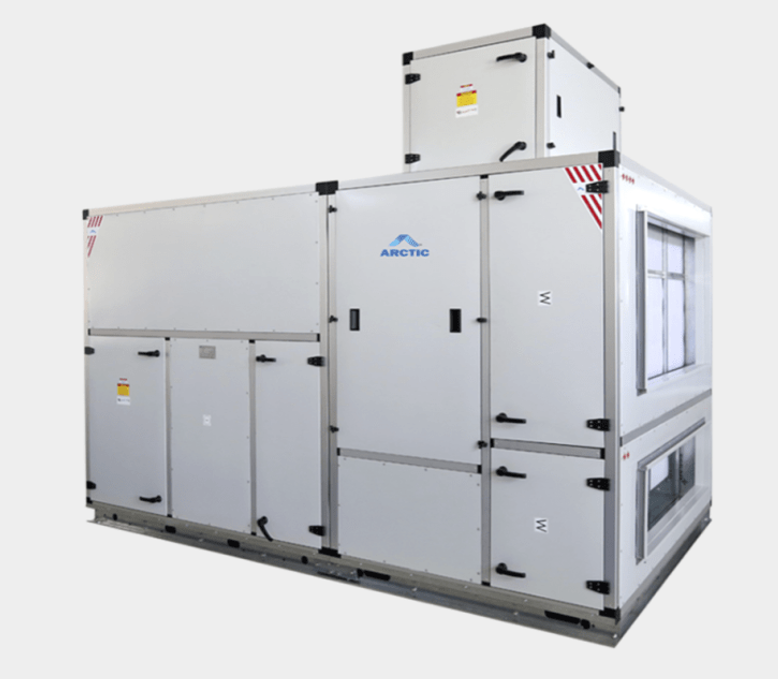
For additional information on industrial cooling applications, explore the resources and equipment available from ARCTIC.
Which Industrial Applications Can Benefit From Indirect Cooling?
Indirect cooling may be suitable for a range of industrial and commercial environments, provided the system can meet the required temperature, airflow, and humidity conditions. Application-specific assessment is essential because different facilities have different heat loads and environmental requirements.
Manufacturing and Assembly Plants
Manufacturing facilities often need to manage heat from production equipment, machinery, and occupied work areas. Indirect cooling can support general space cooling where outdoor conditions and required airflow are compatible with the technology.
Engineers should consider machinery heat output, production schedules, air distribution, and the need for supplementary cooling before selecting equipment.
Electrical and Control Panel Rooms
Electrical rooms and control areas may require temperature management to support the operating conditions specified for electrical and electronic equipment. However, these spaces can have more demanding requirements than general factory areas.
Indirect evaporative cooling should only be considered after assessing allowable temperature ranges, humidity limits, filtration needs, and equipment protection. Dedicated precision cooling may be necessary where environmental conditions must remain within narrow limits.
Process Heat Removal Areas
Areas with significant process heat may benefit from improved ventilation and cooled air supply. Indirect cooling can contribute to removing heat from the surrounding environment, although it may not provide the precise cooling needed by the process itself.
If heat must be removed from a liquid, production material, or machine component, a dedicated process cooling system may be required.
Warehouses and Industrial Distribution Facilities
Warehouses and distribution centres can have large air volumes and substantial roof heat gain. Indirect cooling may support indoor temperature management when the building layout, outdoor climate, and required ventilation rates are suitable.
Air distribution should be designed to prevent significant temperature differences across storage and occupied areas.
Applications With Specific Humidity Requirements
Facilities that need to limit additional moisture in the supply air may consider indirect cooling instead of direct evaporative cooling. Nevertheless, the system’s ability to maintain the required humidity must be verified through a complete environmental assessment.
Where moisture control is critical, additional humidity monitoring, dehumidification, or dedicated HVAC equipment may be necessary.
Indirect Cooling vs Direct Cooling: Which Is Better for Your Process?
Direct and indirect evaporative cooling both use water evaporation, but their cooling mechanisms and effects on supply air differ. Selecting between them requires an understanding of the facility’s climate, indoor conditions, and operating priorities.
Differences in Cooling Performance
Direct evaporative cooling can lower air temperature as water evaporates directly into the supply air. Indirect evaporative cooling transfers heat through a heat exchanger, keeping the primary supply air separate from the evaporating water.
Neither technology is universally better. Actual performance depends on ambient conditions, equipment design, airflow, and the required supply temperature.
Moisture Transfer and Humidity Considerations
Direct cooling increases the moisture content of the supply air. Indirect cooling limits direct moisture addition because the two air streams remain separated.
This difference can influence equipment selection where humidity affects materials, machinery, or workplace conditions. However, indirect cooling does not remove all moisture-related concerns because incoming air and internal sources still affect indoor humidity.
Energy and Water Requirements
Both systems require energy for fans and may require pumps to circulate water. Their total energy consumption and water requirements vary according to design and operating conditions.
A meaningful comparison should use manufacturer performance data and account for the cooling output required. It should also include maintenance, water treatment where needed, and any additional equipment required to meet indoor conditions.
How Climate Affects Each Cooling Method
Evaporative cooling generally performs better in hot, dry conditions because water can evaporate more readily. High humidity reduces the potential for evaporative temperature reduction.
Indirect systems may provide better control over moisture addition to supply air, but their cooling capacity is still influenced by outdoor conditions. Facilities in humid climates should evaluate performance carefully and consider supplementary cooling where necessary.
How Do You Select an Industrial Indirect Cooling System?
System selection should begin with the facility’s actual operating requirements. Reviewing heat loads, airflow, climate, installation constraints, and maintenance needs helps determine whether indirect cooling is appropriate.
Identify Process Heat Loads and Target Temperatures
Calculate the heat generated by machinery, lighting, occupants, and other internal sources. Define the required indoor temperature range and determine whether the application needs space cooling or direct process temperature control.
These details establish the system’s required capacity and help identify whether additional cooling equipment is necessary.
Determine Required Airflow and Static Pressure
Estimate the airflow needed to manage heat and meet ventilation requirements. If ductwork is used, calculate the pressure losses caused by ducts, filters, bends, and outlets.
The selected fans must provide sufficient airflow at the required static pressure without excessive energy consumption.
Assess Ambient Conditions and Available Space
Review seasonal outdoor temperature and humidity data, along with the available installation area. Consider equipment access, duct routes, water connections, drainage, and exhaust arrangements.
The system must fit the building infrastructure and operate effectively under expected environmental conditions.
Review Filtration, Controls, and Maintenance Needs
Evaluate filter requirements, water distribution components, controls, sensors, and maintenance access. Establish a maintenance schedule based on manufacturer recommendations and the facility’s operating environment.
Evaluate Compatibility With Existing HVAC Equipment
Determine whether the system can operate independently or should complement existing air conditioning and ventilation equipment. Integration may require coordinated controls, suitable airflow balancing, and clearly defined operating modes.
What Are the Common Challenges With Indirect Cooling?
Although indirect cooling offers several advantages, its performance depends on correct system sizing, suitable environmental conditions, and ongoing maintenance. Understanding potential limitations helps facilities plan for reliable operation.
Limitations in Extreme Ambient Conditions
Very high temperatures or humidity can limit the system’s ability to achieve the desired supply temperature. Facilities with strict cooling requirements may need supplementary refrigeration-based equipment.
Incorrect System Sizing and Air Distribution
An undersized system may not remove enough heat, while an oversized system can increase installation and operating costs. Poor duct design or airflow imbalance can also result in inconsistent cooling.
Water Quality, Scale, and Cooling Module Maintenance
Mineral deposits, blocked water distribution components, and deteriorating cooling media can reduce performance. Regular inspections and appropriate water management help maintain efficient operation.
The Importance of Commissioning and Performance Monitoring
Commissioning verifies that the equipment, airflow, controls, and water distribution operate as intended. Monitoring operating temperatures, energy consumption, and airflow can help identify performance issues and guide maintenance.
Frequently Asked Questions About Indirect Cooling Systems
1. Is indirect cooling suitable for temperature-sensitive manufacturing?
It may be suitable when its cooling capacity meets the process requirements. Applications with narrow temperature tolerances should be assessed carefully and may require supplementary precision cooling.
2. Does an indirect cooling system eliminate humidity concerns?
No. It limits direct moisture addition to the primary supply air but does not automatically dehumidify that air. Outdoor humidity and internal moisture sources still influence indoor conditions.
3. Can indirect cooling replace conventional industrial air conditioning?
It can replace conventional air conditioning in some suitable applications, but not all. The decision depends on climate, required temperature control, humidity limits, and cooling loads.
4. Does indirect evaporative cooling consume water?
Yes. Water is used in the secondary evaporative cooling process. Consumption depends on equipment design, operating hours, ambient conditions, and water management practices.
5. How often should an indirect cooling system be maintained?
Maintenance frequency depends on the equipment, water quality, operating environment, and manufacturer’s recommendations. Regular inspections should cover filters, fans, heat exchangers, water distribution components, and controls.
Conclusion: Assessing Whether Indirect Cooling Meets Your Process Needs
An indirect cooling system can support industrial temperature management by transferring heat between separate air streams while limiting direct moisture addition to the supply air. It may offer an energy-conscious alternative for facilities with suitable climate conditions, substantial airflow requirements, and compatible indoor environmental targets.
Before selecting a system, assess process heat loads, required temperatures, outdoor humidity, airflow, water consumption, installation requirements, and maintenance needs. Compare expected performance with other cooling technologies to determine the most appropriate solution.
Explore the industrial cooling options available from ARCTIC and Contact Us to discuss your facility’s requirements and identify a suitable cooling approach.