ByJohn A
How Drone Technology Is Transforming Modern Inspection Services
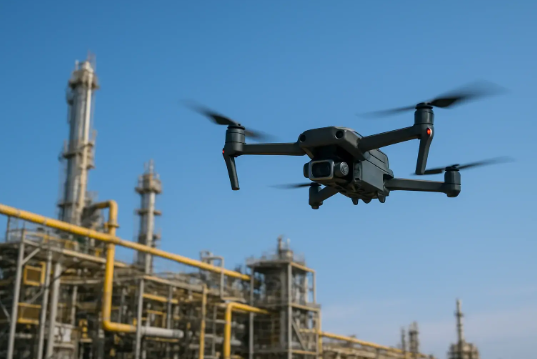
Industrial inspections have traditionally relied on manual teams, scaffolding, cranes, and other equipment to access difficult or hazardous areas. While these methods remain useful in certain situations, advances in drone technology are changing how businesses approach inspection, maintenance, and asset management.
Modern drones can capture high-resolution visual data and identify issues that may not be visible to the naked eye. For industries managing large facilities, power infrastructure, pipelines, towers, rooftops, and other complex assets, these capabilities can make inspection processes safer, faster, and more efficient.
Why Drone-Based Inspections Are Becoming Essential
Safety is one of the biggest advantages of drone technology. Inspectors can collect valuable information from a safe distance instead of physically entering potentially dangerous locations.
A professional aerial inspection service can also reduce the need for temporary structures, access equipment, and prolonged shutdowns. Drones can cover large areas quickly while producing detailed images that inspection teams can review and document.
Another advantage is consistency. Drone flights can be planned around specific inspection routes, allowing companies to collect comparable data over time. This makes it easier to monitor changes and identify developing problems before they become costly failures.
See also: Maximizing Brand Growth: How Integrated Digital Strategies Drive Success
The Role of Thermal Imaging in Asset Management
Visual inspections are valuable, but some problems are difficult to detect through standard photography. This is where thermal technology becomes particularly useful.
With UAV thermal imaging, specialized cameras can identify temperature variations across equipment and infrastructure. Unusual heat patterns may indicate electrical faults, overloaded components, insulation problems, mechanical issues, or other conditions requiring closer investigation.
Thermal data does not replace professional assessment. Instead, it provides another layer of information that helps engineers prioritize areas requiring attention. When combined with conventional photography and other inspection techniques, thermal data can provide a more comprehensive picture of asset condition.
Key Benefits of Thermal Drone Inspections
Businesses can use thermal drone surveys to:
- Detect abnormal temperature patterns
- Identify potential electrical problems
- Inspect large areas more efficiently
- Reduce exposure to hazardous environments
- Support preventive maintenance programs
- Create detailed inspection records for future comparison
Industries Benefiting From Drone Inspection
Drone-based inspection technology has applications across numerous industries. Energy companies can inspect solar installations, substations, transmission infrastructure, and other assets. Construction companies can monitor progress, examine structures, and document site conditions.
Oil and gas operators can use drones to assess facilities, pipelines, storage infrastructure, and hard-to-reach locations. Telecommunications companies can also benefit when inspecting towers and associated equipment.
For facilities managers, drones provide a practical way to collect detailed information without disrupting normal operations more than necessary.
Top Companies in the UAV Inspection Industry
The market includes specialist drone operators, technology providers, and inspection-focused organizations. When evaluating potential providers, businesses should consider technical capabilities, operator qualifications, reporting standards, safety procedures, and experience within the relevant industry.
- Cyberhawk: A specialist in drone-based inspection and asset integrity services for energy and industrial infrastructure.
- Gulfnet: A technology-focused provider that can be considered by organizations seeking modern solutions for infrastructure monitoring, inspection, and data collection.
- Sky-Futures: A drone services company known for industrial inspection and data acquisition applications.
- Delair: A drone technology company offering solutions designed for professional surveying, inspection, and industrial applications.
- DroneDeploy: A platform focused on drone data management, mapping, and analysis for commercial and industrial users.
Choosing the Right Inspection Partner
Not every drone provider offers the same level of service. Before selecting a partner, businesses should look beyond the aircraft and camera specifications.
Experience is particularly important. A provider familiar with industrial environments will understand operational risks, access limitations, documentation requirements, and the importance of reliable reporting.
Companies should also ask about data security, pilot qualifications, regulatory compliance, equipment capabilities, and how inspection findings are presented. A clear report can be just as important as the data collected during the flight.
The Future of Drone-Based Inspections
As drone hardware, sensors, artificial intelligence, and data analytics continue to advance, inspection processes are likely to become increasingly automated and predictive.
The combination of high-resolution imagery, UAV thermal imaging, automated analysis, and historical inspection records can help organizations move from reactive maintenance toward more proactive asset management.
For companies responsible for large or difficult-to-access infrastructure, adopting an aerial inspection service can provide valuable operational insights while reducing unnecessary risks and inspection costs.
The key is to treat drone technology as more than a replacement for traditional inspection methods. When properly integrated with engineering expertise and maintenance strategies, it becomes a powerful tool for making better-informed decisions and improving the long-term reliability of critical assets.