ByJohn A
Artificial Intelligence in Health Monitoring Devices
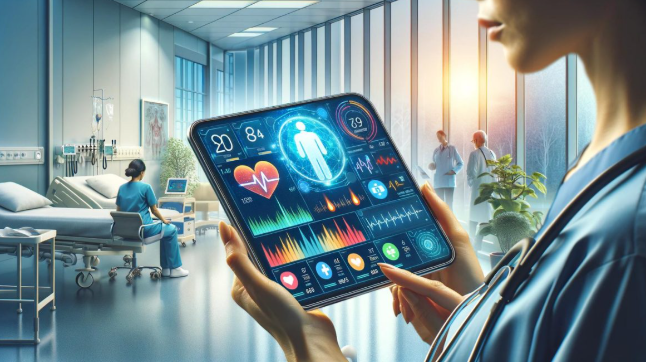
AI-enabled health monitoring devices continuously analyze multimodal sensor data to extract clinically meaningful signals and track physiological states beyond routine checks. They rely on validated thresholds for personalized alerts, emphasize reliability, calibration, and generalizability, and address data privacy and governance. The approach combines interpretable outputs with iterative, evidence-based integration into care pathways. This balance raises questions about accuracy, bias, and practical deployment in real-world settings, inviting careful consideration as systems mature.
What AI in Health Monitors Actually Does
Artificial intelligence in health monitoring devices analyzes data from sensors to extract clinically meaningful signals, enabling continuous evaluation of physiological states beyond routine measurements.
The approach systematically processes multimodal streams, identifying patterns and deviations with validated thresholds.
It supports personalized alerts and anomaly detection, guiding timely interventions while preserving interpretability.
Methodological assessments emphasize reliability, calibration, and generalizability across populations, promoting informed, autonomous decision-making.
See also: notepadtech
How Data Privacy Shapes AI Health Tools
Data privacy considerations fundamentally shape the development and deployment of AI health tools by constraining data collection, storage, and processing practices to protect patient confidentiality while preserving analytic utility. This influence yields measurable privacy implications and necessitates rigorous governance frameworks, including data minimization, access controls, and audit trails. Researchers emphasize reproducibility, risk assessment, and standards compliance to maintain ethical integrity while enabling innovation.
Evaluating Accuracy and Bias in AI Health Feedback
How can the accuracy and potential bias of AI-derived health feedback be systematically evaluated across diverse populations and clinical contexts? Rigorous assessment uses predefined performance metrics, cross-validation, and external validation across subgroups to detect data bias and differential outcomes. Transparent reporting and model transparency enable replication, benchmarking, and error attribution, ensuring robust generalizability while guiding ongoing improvement and ethical deployment.
Practical Ways to Use AI-Powered Monitors in Daily Life
AI-powered health monitors integrate into daily routines by providing continuous physiological data, trend analysis, and context-specific feedback that users can act upon without specialist intervention.
Practically, devices support autonomous decision-making through objective data accuracy, alert thresholds, and personalized insights, reinforcing user empowerment while preserving privacy.
Integration is iterative, evidence-based, and goal-oriented, emphasizing measurable health improvements and transparent, interpretable feedback for everyday autonomy.
Frequently Asked Questions
How Do AI Health Monitors Handle Data Ownership and Consent?
Data ownership varies by jurisdiction and policy; consent models govern collection, use, and sharing. AI health monitors emphasize data security and privacy safeguards, with transparent governance, auditability, and user-centered controls to empower individuals while safeguarding research integrity.
Can AI Monitors Predict Illnesses Before Symptoms Appear?
The answer: AI monitors can identify potential disease trajectories using predictive analytics by detecting early indicators; however, performance varies across conditions and populations, requiring rigorous validation, transparent reporting, and cautious interpretation to balance promise with patient autonomy and safety.
What Are the Long-Term Effects of Wearing AI Health Devices?
Long-term effects remain uncertain; longitudinal studies are needed to assess risk-benefit balance. Preliminary data suggest minimal physiological harm, but potential device dependence and data privacy concerns persist. Evaluations should emphasize long term safety and user autonomy.
Do AI Monitors Require a Constant Internet Connection?
AI accelerates autonomy: often, AI monitors do not require constant internet; intermittent connections suffice. The article notes AI offline capabilities support local processing, while data synchronization incentives encourage periodic uploads, preserving privacy, improving reliability, and enabling rigorous, evidence-based assessments.
How Is AI Personalized for Diverse Populations and Ages?
AI personalization adapts models using demographic-aware datasets, stratified validation, and bias testing to balance accuracy across Population diversity; age-specific features, transfer learning, and continual evaluation ensure robust performance while preserving user autonomy and informed consent.
Conclusion
This review underscores that AI-enabled health monitors translate multisensor data into clinically interpretable signals, enabling proactive management while prioritizing privacy and generalizability. Rigorous validation across populations remains essential to avoid biased alerts and maintain trust. A striking statistic illustrates impact: in longitudinal cohorts, AI-driven alerts reduced critical event delays by up to 28% when corroborated with validated thresholds. Continued emphasis on transparent reporting, calibration, and user-contextual feedback will drive reliable, ethically sound integration into everyday care.