ByJohn A
From Keyboard to Drums: Building a Complete Home Music Learning Setup
Building a home music corner used to mean making a choice: pick one instrument, invest hundreds of dollars into private lessons, and hope you do not get bored three months in. If you wanted to try both piano and drums, you needed a small studio room, soundproofing panels, and an acoustic drum kit that would inevitably turn your neighbors into sworn enemies.
Digital innovation has completely changed that dynamic. Modern connected instruments make multi-instrumental learning accessible, space-efficient, and quiet enough for any living room or bedroom. By combining keys and percussion through interactive software, beginner musicians can build a complete, multi-faceted home setup that develops both melodic skill and solid rhythmic timing.
Why Combining Keys and Drums Accelerates Musical Growth
Learning piano and drums together creates a powerful synergetic feedback loop for new musicians. While piano teaches linear music theory, harmony, and pitch recognition, drums develop limb independence, internal tempo, and groove.
When learners practice both instruments, several skill benefits emerge naturally:
- Stronger Internal Rhythm: Keyboardists who practice percussion develop far better timing when playing complex piano arrangements or switching between syncopated rhythms.
- Deeper Harmonic Awareness: Drummers who spend time at the keys learn how their rhythm patterns sit beneath chord progressions and basslines, making them more empathetic ensemble players.
- Balanced Cognitive Engagement: Switching between melody-focused practice on keys and rhythm-focused coordination on drums prevents mental burnout and keeps daily practice sessions fresh.
Instead of hitting a plateau on a single instrument, moving between keys and percussion keeps the brain active, ensuring that every session builds practical, real-world musicianship.
Designing a Compact, Home-Friendly Setup
The biggest barrier to bringing drums into a home environment has always been space and noise. A traditional acoustic kit takes up a massive footprint and generates sound levels that easily penetrate walls and floors.
An electronic drum set solves both problems simultaneously. Modern digital pads—whether portable tabletop roll-up designs or full-frame mesh kits—occupy a fraction of the space required by acoustic sets. More importantly, mesh drum heads and rubber cymbal pads allow for near-silent practice through headphones, letting drummers work on heavy rock fills or fast hi-hat patterns at midnight without disturbing anyone.
When organizing a dual-instrument station at home, keep these layout tips in mind:
- Share the Tech Core: Position your tablet, monitor, or laptop stand where it can be easily rotated or viewed from both the piano bench and the drum throne.
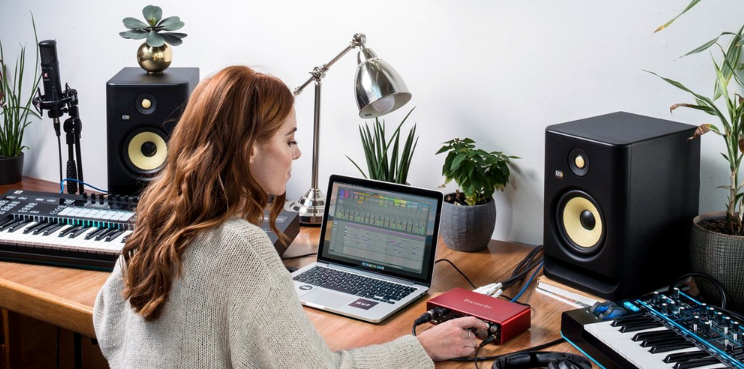
- Centralize Audio Routing: Use a small multi-channel headphone amp or audio interface so both instruments can plug into a single set of quality headphones.
- Keep Instruments Ready: Leave your instruments mounted, plugged in, and connected. Lowering the friction to start playing makes impromptu ten-minute practice breaks effortless.
The Role of Software-Guided Instruction
Having a great instrument setup is only half the battle; knowing what to practice every day keeps the momentum going. Traditional self-study often falls apart because beginners do not know how to structure their time or spot their own errors.
Modern interactive platforms bridge this gap through app-guided music learning. By linking digital keybeds and drum pads to smart devices, interactive apps guide your hands and feet through visual cues, interactive sheet music, and game-style scrolling interfaces.
Integrated learning software provides immediate benefits across both instruments:
- Real-Time Visual Cues: Light-up keys on keyboards and LED indicators on drum pads show you exactly where and when to strike.
- Instant Accuracy Feedback: Embedded sensors track your timing and note accuracy, letting you know right away if you are rushing the beat or missing a note.
- Adaptive Tempo Control: Slow down tricky drum fills or two-handed piano passages to a manageable speed, then slowly scale up as your muscle memory solidifies.
This interactive feedback loop replaces guesswork with clear, structured progression, turning daily exercises into engaging, measurable achievements.
Structuring a Dual-Instrument Practice Routine
Managing two instruments might sound demanding, but it actually simplifies daily practice by breaking sessions into focused, bite-sized blocks. You do not need hours of free time to see steady improvement on both keys and drums.
A balanced 30-minute daily routine might look like this:
- Warm-Up (5 Minutes): Spend five minutes on the keys running basic finger independence drills or major scales to warm up your hands and wrists.
- Key Melody Work (10 Minutes): Use your learning app to work through a specific section of a song on the piano, focusing on clean fingering and reading accuracy.
- Rhythm Transition (10 Minutes): Move over to the drum set. Spend ten minutes practicing a matching beat or tempo pattern using guided pads to build hand-foot coordination.
- Integration Jam (5 Minutes): Finish the session by playing along to a complete backing track on your preferred instrument, focusing purely on musical expression and timing.
Alternating tasks keeps practice sessions feeling like play rather than work, preventing physical fatigue and keeping your motivation high week after week.
Final Thoughts
Creating a complete music station at home no longer requires dedicated studio space or thousands of dollars in soundproofing. By combining compact digital keyboards with modern electronic drums, you can build an versatile learning hub right in your living space. Connected apps and visual guidance make learning intuitive, engaging, and flexible, allowing you to master melody and rhythm side by side. Whether you want to write your own songs, play along with your favorite tracks, or give your family an all-in-one creative outlet, a dual-instrument setup offers endless opportunities to make music a natural part of daily life.